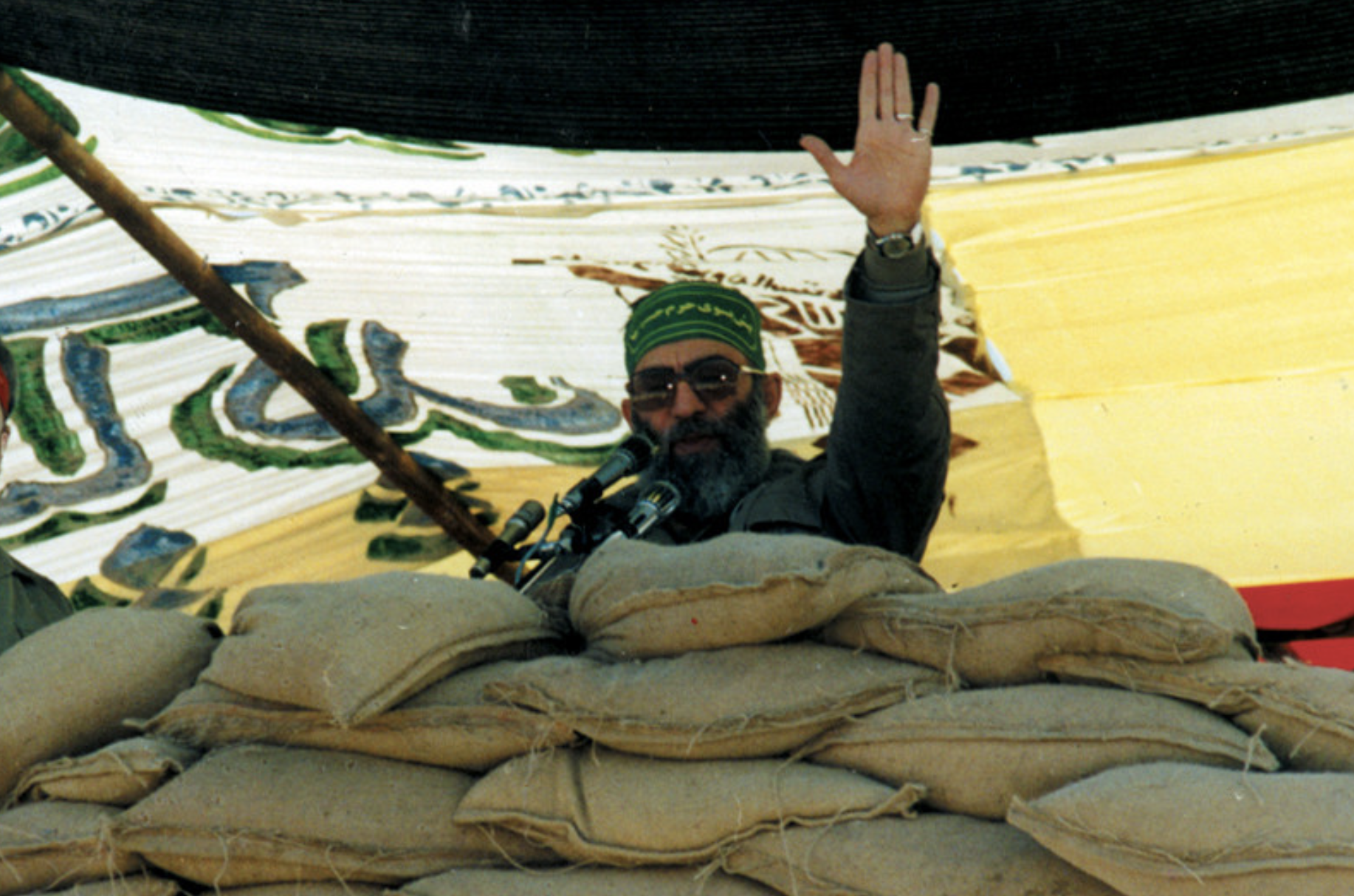
Fatah mourns the martyrdom of His Eminence, Ayatollah Seyyed Ali Hosseini Khamenei, Supreme Leader of the Islamic Republic of Iran, who was cut down by the missiles of empire on February 28th, 2026.
We use the word martyr with full deliberation and full weight. A martyr is not merely one who dies, but one who is killed for the convictions he would not renounce. Ayatollah Khamenei did not pass quietly in the comfort of compromise. He was hunted by a sophisticated apparatus of surveillance and violence — because he would not yield.
The United States and the Zionist entity have spent decades assassinating, destabilizing, sanctioning, and bombing their way across West Asia, targeting those who resist their hegemony. Muammar Gaddafi, Bashar al-Assad, Qasem Soleimani, Ismail Haniyeh, Hassan Nasrallah, Yahya Sinwar — and now Ayatollah Khamenei.
To liberals — and to those leftists who have failed to hold anti-imperialism as a foremost value — Imam Khamenei was merely a cleric. A relic of a “pre-capitalist” past. A mullah.
That shallow reading says far more about those who repeat it than about the man himself. From his youth and throughout his life, Ayatollah Ali Khamenei was a revolutionary.
He resisted the Shah of Iran, under whom he was imprisoned and exiled. He later resisted the war imposed on Iran by Saddam Hussein, a war backed by the United States, the Gulf monarchies, and the Soviet Union. In 1981 he survived an assassination attempt carried out by the MEK, then aligned with Saddam Hussein. His right hand was permanently crippled, and his lungs and vocal cords were severely damaged.
For the Palestinian people, Ayatollah Khamenei’s significance must be measured in decades of consistency. At a time when much of the Arab world wavered, normalized relations with the Zionist entity, or abandoned the cause altogether, he did not. The occupation of Palestine, he maintained, was a central wound in the Muslim world. He translated that conviction into sustained political, moral, and material support for the Palestinian resistance, despite brutal sanctions and constant pressure from imperial powers.
We extend particular solidarity with Muslims across the world — and especially with many in the Shia community, for whom Ayatollah Khamenei was not only a political figure but a religious authority.
We condemn the act of terrorism carried out by U.S. Marines stationed at the American Consulate in Karachi, in which at least nine civilians — most of them Shia — were killed and dozens were injured. While it is true that some members of the crowd engaged in acts of violence against the consulate, it is equally true that U.S. diplomatic missions across the globe are heavily fortified structures, with bulletproof glass, reinforced doors, Marine security detachments, and concentric security perimeters.
They are built this way because the United States understands, at an institutional level, that it has made enemies everywhere it operates through the accumulated weight of coups, sanctions, drone strikes, aerial bombardment, genocides, proxy wars, and the systematic erasure of peoples who dared to resist.
The violence in Karachi is the backlash of a world that has been pushed, for generations, beyond the limits of what human beings can be expected to silently absorb. It cannot be separated from the imperial violence that produced it. Nor can it be separated from the same imperial order that has now taken the life of Ayatollah Khamenei.
Fatah mourns Ayatollah Khamenei as a figure of world-historical significance in the struggle against imperial hegemony. We do so with the sober knowledge that grief is not the end of struggle — it is its continuation by another name.
We wish the Islamic Republic of Iran and its allies strength and perseverance in the legitimate defense of their nation and their revolution against the Zionist aggression imposed upon them.
May the blood of the martyrs never be shed in vain.