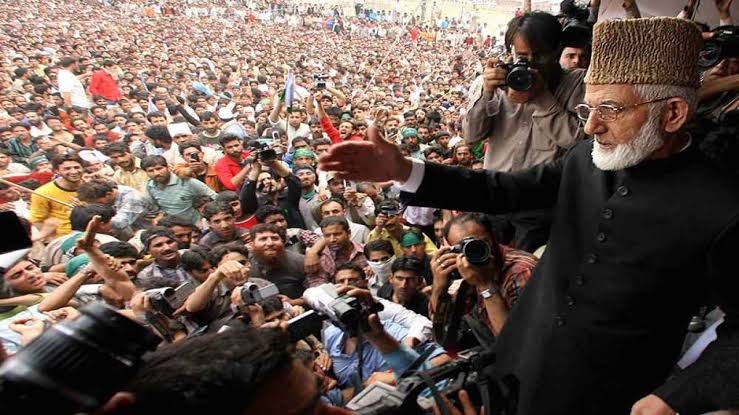
On the fifth anniversary of his passing, Fatah pays tribute to Syed Ali Shah Geelani, widely known as Bab, the supreme leader of Kashmir’s freedom struggle. For decades, Geelani stood at the forefront of the movement for Kashmiri self-determination, becoming a symbol of steadfastness, sacrifice and refusal to compromise.
Kashmir has produced many iconic figures. It has lost martyrs and seen generations of its leaders and activists imprisoned, tortured and confined. Yet even among them, Geelani occupied a place of his own.
His opponents often described him as a “hardliner,” a label meant to condemn his unwillingness to dilute his politics for the sake of approval, recognition or access to power. That reputation extended well beyond India.
The United States Embassy in New Delhi maintained a “no contact” policy toward him from 2001. In its own diplomatic reporting, the Embassy described him as the most “rigid” and uncompromising separatist political figure in Kashmir. In 2007, when Geelani sought to travel to the United States for treatment for cancer in his remaining kidney, he was denied a visa.
Yet years of imprisonment, prolonged house arrest, isolation and diplomatic pressure failed to move him from his position on Kashmir’s right to self-determination. To the end, he remained unwilling to exchange principle for accommodation.
His death made clear both the weight his name still carried and the extent to which the occupation feared it. He was buried before dawn, in darkness and under heightened security, without the mass funeral that would ordinarily have followed the death of a leader of his stature. The authorities knew that such a funeral would become a massive public demonstration of the loyalty and reverence he continued to command.
Five years later, even his grave remains heavily guarded, treated by the occupying Indian state as a politically charged space requiring control.
But no state decree, prison sentence or guarded grave could determine Geelani’s place in Kashmir. That had already been decided in the streets, where Kashmiris had long since delivered their verdict:
“Na jhukne wala Geelani. Na bikne wala Geelani.”
(“Geelani, who would never bend. Geelani, who could never be bought.”)